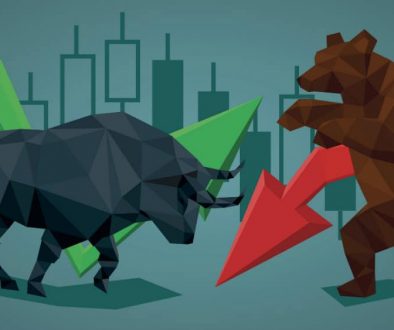

With the tumultuous week the FTSE 100 has had, many have been panicking. But theyre wrong. In fact, the message should not simply be Dont Panic, but instead Rejoice!
Why so? Well, unless youre nearing the end of your investment career, when youre more interested in withdrawing cash to live on (or buy that Ferrari), youll still be in the buying stage and youll want to be picking up shares as cheaply as you can get them, wont you?
And now that the FTSEs down 13% since late April, to around 6,160 (having dipped below 6,000 this week), youre ignoring all those gloom-mongers who are stupidly selling out of shares they bought earlier at higher prices, and youre snapping up the bargains, arent you?
Arent crashes brilliant?
The thing is, a stock market crash is exactly what we should be hoping for when were in the process of building up our portfolios, and weve been pretty lucky in recent years with the financial crisis coming not long after the dot com crash.
If youd bought into the FTSE 100 in March 2009 at the worst point in the banking crash (just when all the investment institutions were at their most irrational and selling out), youd have more than doubled your money by today with dividends included. And any money you invested in the depths of the dot com sell-off in 2003 would again have more than doubled by today, including dividends.
Of course, its impossible to time the peaks and troughs of the market, but even if youre just a regular investor the crashes will work to your advantage. If youre investing a regular amount every month in FTSE 100 shares, youll have picked up quite a few more shares this month than you did in previous months.
Big three going cheap
Take the three biggest companies in the FTSE 100. For every 100 you invest in Royal Dutch Shell today youd get 5.9 shares, but this time last month youd only have got 5.7, and back in May youd have snagged just 5 of them you can get 18% more shares now than three months ago.
The same goes for HSBC Holdings. Every 100 today would buy 19.5 shares, compared to the mere 16 youd have had in May (21% more). And for GlaxoSmithKline youd pick up 7.6 shares, compared to Mays 6.8 (12% more). And as a bonus, youd be tying in bigger dividend yields simply because the share price has dropped, so your future income stream will be enhanced by the market fall.
Sure, HSBC is directly affected by the problems in China as it does so much of its business there, and Shell is hit by falling oil. But you should be in a nice position when the oil recovery does come (which it surely will), and GlaxoSmithKline is about as immune to regional calamities as you can get. And with a balanced portfolio, these individual risks are averaged out.
And, dont forget, theyre all exactly the same companies they were a week ago, before the latest panic set in.
Any downside?
Are there any cautions to add to this? Yes, there are. Dont invest in the Chinese stock market, because it is manipulated to suit the needs of the Chinese government and is not there to provide a free market for investors. And dont invest in small companies, especially AIM ones, that do the bulk of their business in China, as they are overseen by Chinese regulatory bodies which are even more incompetent than AIM itself.
But when the UK and US markets fall, just keep on dripping in your investment cash, and youll end up wealthier for it.
Regular long-term investment through the ups and the downs could even get you to happy millionaire status before you retire.
To find out more, get yourself a copy of the Motley Fool’s special 7 Simple Steps For Seeking Serious Wealth report, which shows you how investing in shares and reinvesting dividends has wiped the floor with every other form of investment over the past century and more.
It’s completely FREE, so click here for your personal copy and get started today.
Alan Oscroft has no position in any shares mentioned. The Motley Fool UK has recommended GlaxoSmithKline and HSBC Holdings. We Fools don’t all hold the same opinions, but we all believe that considering a diverse range of insights makes us better investors.